
Cars stuck in mud are not only frustrating but can also be dangerous. Mostly it depends on where it happens. It does not matter whether you are driving along a muddy trail, a dirty road that has been soaked in rain, or an unpaved parking lot; once your car gets stuck in the mud, it can become a real nightmare.
However, most of the time you can free your car without damaging it or towing it. Knowing how to save your car when stuck in mud can save you from unnecessary stress.
Reasons for Getting a Car Stuck in Mud
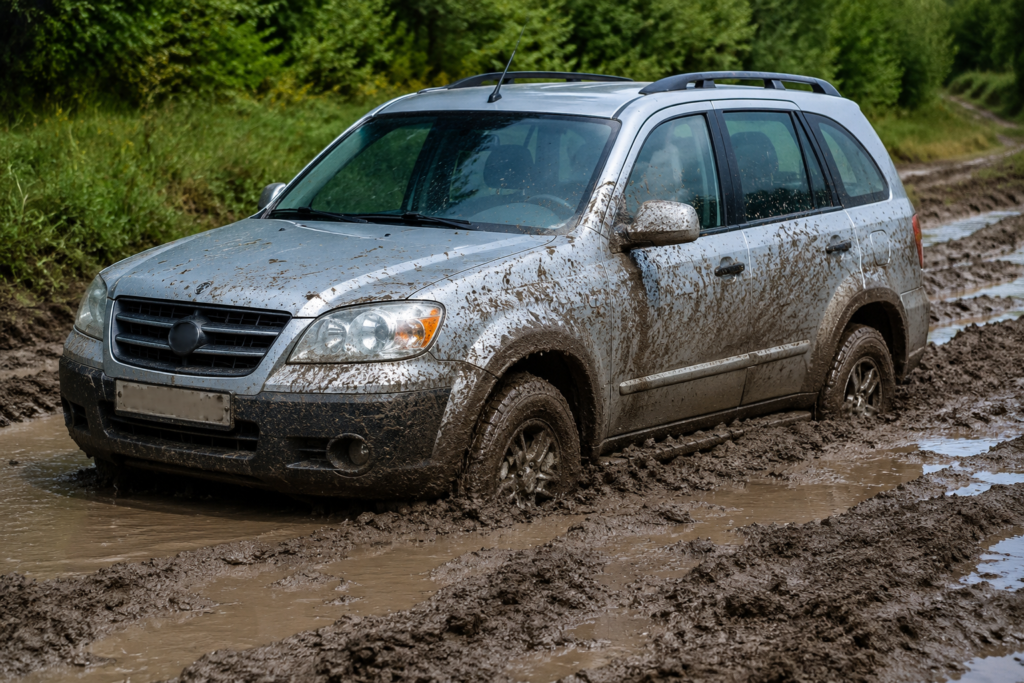
Mud creates a unique challenge for vehicles because it reduces tire traction and if they cannot grip the ground properly, they begin to spin instead of moving the vehicle forward. This situation often drags the tires deeper into the mud, creating ruts that make it even harder to escape.
The following reasons may cause a vehicle to become stuck in mud:
- Heavy rainfall makes the surface soft
- Low-traction tires
- Fast driving in muddy conditions
- Stopping in deep mud
- Heavy vehicle weight
- Two-wheel-drive vehicles struggling in challenging conditions
In case the vehicle sinks deeper, recovery becomes more difficult.
Keep Calm and Analyze the Situation
Thinking about what to do when your car is stuck in mud? Well, the very first step is to keep calm. Most people tend to push the gas pedal hard, but that makes things worse.
Before doing anything:
- Place your car in park.
- Exit your car safely and analyze the situation.
- Find out how far into the mud your tires are.
- Look for any obstructions under the car.
- See if all wheels are stuck or just one side.
A quick assessment can help you choose the best solution for your vehicle.
Avoid Spinning the Tires
Another common error that drivers make when getting stuck is to keep spinning the tires. Even though it seems logical to think that more power will get the car out of trouble, spinning tires actually tend to sink into deeper ruts and compact the mud around the tires even more.
If you have spinning tires without moving the car, then just stop right away.
Clear the Mud Around the Tires
Cleaning the mud off around the tires will increase your probability of successfully getting unstuck.
Use:
- A shovel
- A stick or branch
- Your hands (as needed and when possible)
Clean the mud around:
- The front of the tires
- The back of the tires
- Below the car if the car is sitting on top of the mud
Creating a path for the tires allows them to regain traction and move more freely.
Use Traction Aids
Gaining traction is the ultimate solution to getting out of the mud. Laying something underneath the tires can give you the traction necessary to pull yourself free from the mess.
Useful traction aids include:
- Recovery boards
- Planks of wood
- Cardboard
- Car floor mats
- Gravel
- Rocks
- Sand
The best way to make use of this strategy is to lay the traction aid underneath the drive wheels of your vehicle and then accelerate slowly. Do not place yourself in front of or behind the car when during this action.
Try Rocking the Vehicle
Another method frequently used in such cases is rocking.
For this procedure:
Shift between drive and reverse gears.
Gently accelerate.
Gradually build momentum in both directions.
This action will help widen the tire marks and generate enough momentum for you to get out of the mud.vRemember that frequent gear changes can potentially damage your car’s transmission.
Lower Tire Pressure
Reducing tire pressure increases the tire’s contact area with the ground and thus improves traction.
For example:
- Lowering from the normal level for 5-10 PSI.
- Do not lower pressure excessively.
This can assist in distributing the vehicle’s weight uniformly and avoid sinking.
Upon successful rescue, the tires should be refilled to the recommended pressure by the manufacturer immediately.
Use Four-Wheel Drive if Available
In those cars that have an option of four-wheel drive (4WD) or all-wheel drive (AWD), use it to increase traction and recover the car because it distributes power to multiple wheels, increasing traction and improving the chances of escaping muddy terrain.
Ask for Assistance
If you fail to free yourself, call a rescuer who can help you.
A recovery strap can assist in dragging a car stuck in the mud but it should be connected properly using designated points. Else, there is a high risk of sustaining serious damage or injury.
Some safety considerations:
- Usage of authorized equipment.
- Ensuring that spectators maintain a safe distance.
- Towing performed safely and efficiently.
- No defective equipment used for towing.
For any queries and concerns, seek advice from experienced towing services.
Stopping Your Car from Being Trapped in Mud
It is always more straightforward to avoid a problem rather than deal with it later. Taking a few precautions can help lower your chances of being stranded in mud.
Check Weather Forecast
Rainfall can turn hard ground into soft mud quickly. Check the weather forecast before embarking on any dirt or off-road paths.
Fit Proper Tyres
Mud tyres or all-terrain tyres offer much better traction than regular highway tyres.
Drive Steadily
When traversing muddy grounds, maintain a constant pace, and do not accelerate suddenly.
Steer Clear of Muddy Places
If you are uncertain about whether a muddy patch is safe, pull over first to assess it.
Pack Recovery Tools
They include:
- Shovel
- Recovery boards
- Tow strap
- Compressor
- Tyre pressure gauge
- Gloves
When to Hire a Recovery Service
Other times, it might be better to call for professional assistance. It might be wise to consider hiring a tow truck when:
- The car is stuck up to the axle.
- The chassis is touching the ground.
- Efforts at self-recovery have not been successful.
- The location is dangerous.
- Proper recovery equipment is unavailable.
- There is a danger of damaging the car further.
Professional recovery technicians have all the right equipment and knowledge to free your car without further damaging it.
Conclusion
Cars stuck in the mud can easily transform an ordinary journey into an extremely annoying one. However, with the proper procedure, such problems are manageable and easy to solve. As explained by Orca Towing, the main procedures for getting unstuck involve avoiding excessive wheel spin, properly evaluating the situation, increasing traction, and recovering your vehicle using the correct technique. Being prepared for these situations can save you time, stress, and unnecessary headaches in the future.
This can be particularly important whether you drive on the country roads, construction areas, campgrounds, or even on dirt tracks.
FAQs
What should I do first if my car gets stuck in mud?
First, stay calm and avoid pressing the accelerator too hard. Put the car in park, step out safely, check how deep the tires are stuck, and look for anything blocking the wheels or under the vehicle.
Can spinning the tires help get a car out of mud?
No, spinning the tires usually makes the situation worse. It digs the tires deeper into the mud and reduces traction, making recovery more difficult.
What can I put under tires for traction in mud?
You can place recovery boards, wood planks, gravel, sand, rocks, cardboard, or even car floor mats under the drive wheels to improve traction.
Is it safe to lower tire pressure when stuck in mud?
Yes, lowering tire pressure slightly can improve traction by increasing the tire’s contact with the ground. A small reduction of around 5–10 PSI may help, but tires should be inflated back to the recommended pressure after recovery.
When should I call a towing or recovery service?
Call a professional recovery service if your car is stuck up to the axle, the chassis is touching the ground, self-recovery is not working, or the location is unsafe.
Can a two-wheel-drive car get out of mud?
Yes, a two-wheel-drive car can sometimes get out of mud with proper traction aids and careful driving, but it may struggle more than a four-wheel-drive or all-wheel-drive vehicle.
What tools should I keep in my car for muddy roads?
Useful recovery tools include a shovel, recovery boards, tow strap, gloves, tire pressure gauge, air compressor, and a flashlight.
How can I prevent my car from getting stuck in mud?
Check the weather, avoid deep muddy areas, drive slowly and steadily, use proper tires, and carry basic recovery equipment when driving on dirt roads or off-road areas.